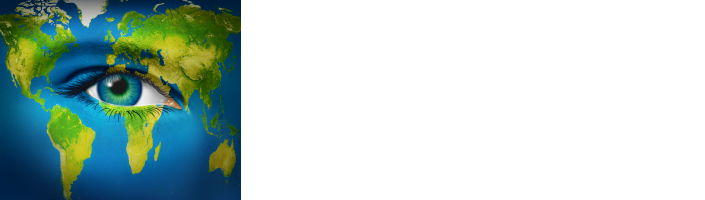


Here’s something nobody really tells you when you move to your second country, or your third—or when, somewhere along the way, “home” quietly stops being a place and becomes a feeling you carry with you.
Everywhere you go, people have a quiet, unshakable belief that the way they do things is simply… the way things are done.
In France, lunch is not a meal—it’s a ritual, almost sacred—and eating at your desk feels, to many, like a small personal tragedy. In China, there’s a genuine puzzlement at the idea that someone would choose to live alone when the obvious answer is family, closeness, and someone noticing whether you’ve eaten yet. In Italy, you’ll be told—with absolute conviction—that a cold draft of air, colpo d’aria, is the root of most human suffering. In America, enthusiasm often passes for a personality, and generosity comes in portion sizes large enough to feed a small village. Delivered, always, with the sincere warmth of a golden retriever. In Portugal, there is saudade—that beautiful, untranslatable ache for something just out of reach—which feels less like an emotion and more like a quiet truth about being human. And in Spain, there’s a gentle, almost radical understanding that if you simply let the afternoon unfold, many problems resolve themselves in their own time.
They are all, of course, completely right.
And also—entirely wrong.
Because after years—decades, really—of packing and unpacking life in different corners of the world, this is what becomes clear: the differences are real. They matter. They’re worth learning, celebrating, and occasionally laughing at with real affection.
But they are not the whole story.
Scratch the surface anywhere, and what you find underneath is remarkably familiar. People who love their children fiercely. People who worry about money. People who find deep, genuine joy in feeding others. People who long to be seen, understood, and—every now and then—left alone. People doing the best they can with whatever tools their culture handed them at the beginning, trying to make sense of the strange, brief, luminous experience of being alive.
We are all, every one of us, making it up as we go along.
The French waiter who looks at you with quiet pity when you ask for the dressing on the side—he’s improvising too. The Italian nonna insisting you eat more is following a script she inherited long ago and never thought to question. And the expat (who shall remain nameless) —who has lived across continents, works in cross-cultural communication, and once described her waist bag as a “fanny pack” to a room full of Brits—is, quite clearly, winging it as well.
And this is not a depressing realization.
It’s a liberating one.
Because if no one has the definitive answer, if no single culture is the control group, then the only sensible response is curiosity.
Go and see how other people do it. Borrow what resonates. Let go of what doesn’t. Eat the food. Learn at least one word in the language—preferably one that doesn’t translate neatly, because those are the ones that tend to hold the most meaning.
And when something confuses you, or irritates you, or makes you feel like an outsider looking in at a room you’re not quite sure you belong in—pause there for a moment. Stay with it. Because just beyond that discomfort is often something unexpectedly valuable: a deeper understanding of someone else, and, quietly, of yourself.
Life is short.
The world is vast.
And none of us really knows what we’re doing—which, it turns out, is part of the magic.
So we may as well stay curious.
We may as well keep exploring.
And we may as well enjoy the ride.




No Comments